The European Anti-Fraud Office (OLAF), which is responsible for auditing funds for the European Union member states and other beneficiary countries of these funds, has opened 36 investigations for the Western Balkan countries. These investigations, which have been made public and are accessible on OLAF’s official website, are reported to have been conducted over the past 5 years.
According to data published in OLAF’s annual reports, the country with the highest number of investigations initiated for the Western Balkans is North Macedonia.
Recently, OLAF has gained additional attention in Albania after news of the cancellation of IPARD II funds.
In its initial public response, the Ministry of Agriculture stated this week that the IPARD funds have not been canceled, and the support continues as usual.
The Ministry clarified that Albanian authorities have been informed about the suspension of a current reimbursement claim for a part of the next expenses.
During the recent plenary session, Minister Frida Krifca also stated that the temporary freeze of funds pending investigation results is a normal practice of the European Union, and the Ministry of Agriculture and Rural Development welcomes the final recommendations to decide on a course of action.
But what is happening specifically with OLAF in Albania and other countries in the region?
According to OLAF’s data, out of 36 investigations initiated for the Western Balkan beneficiary countries of EU funds, 18 of them are related to the misuse of funds by the authorities in the Republic of North Macedonia.
From the initiated investigations, OLAF has presented seven recommendations to European institutions and Macedonian authorities.
The second country with the highest number of investigations initiated in the region is Serbia, with OLAF opening nine investigations and compiling four recommendations.
In Bosnia and Herzegovina, three investigations have been initiated, and two recommendations have been submitted, while Kosovo has seen three investigations initiated and one recommendation.
Regarding Albania, a total of two investigations have been opened, including the one from 2021 concerning agricultural funds. At the bottom of OLAF’s list, with only one investigation, is Montenegro.
However, an OLAF investigation does not always result in finding culprits, as there are various practices of making recommendations.
Just as an investigation can be concluded without identifying culprits, it may also lead to the beneficiary country having to return the suspected misused portion of the funds.
In cases where abuses are evident, the case files are handed over to the relevant law enforcement authorities of the respective countries for initiating criminal investigations.
There is also a clear correlation between a country’s advancement in its European candidacy and the number of investigations initiated. The closer a country gets to membership, the more European funds increase, and consequently, the possibility of abuses widens.
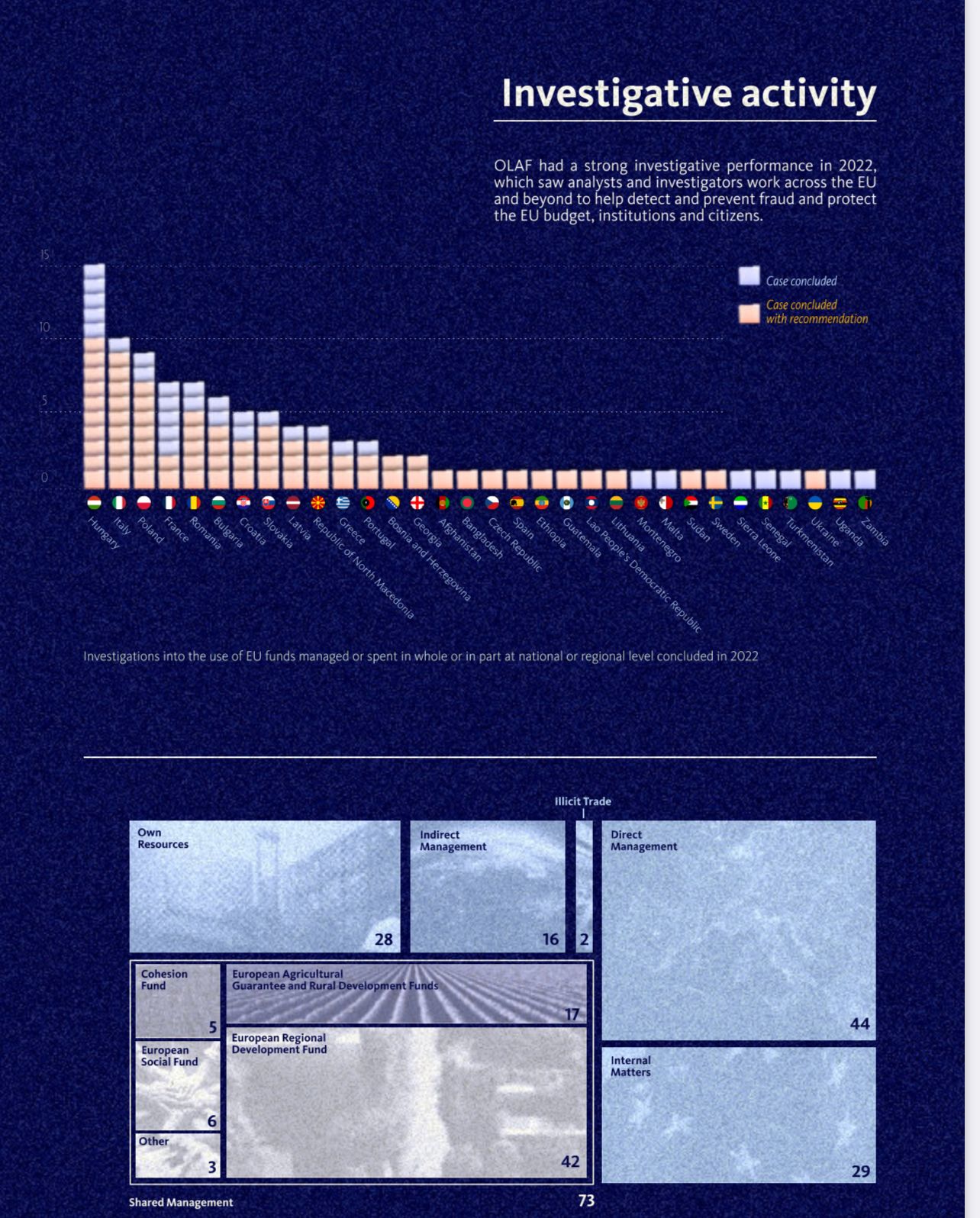
According to OLAF’s data, in the last 5 years, they conducted 131 investigations into embezzlement within the EU member states.
Italy ranks first for the highest number of initiated investigations, followed by Hungary and Poland.
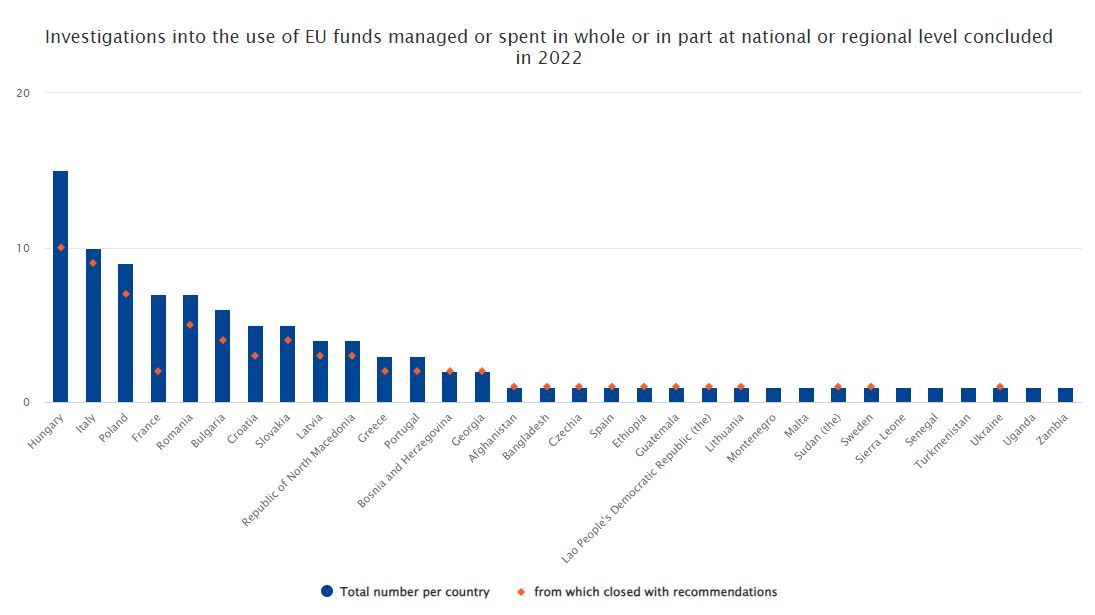
In 2022, OLAF carried out 256 investigations and compiled 275 recommendations for compensating 426 million euros of European taxpayers’ money.
“OLAF had a strong investigative performance in 2022. After analyzing 5567 incoming pieces of information from private and public sources, as well as OLAF’s own sources, 192 investigations were opened with 256 successfully completed during the year, leading to the issuance of 275 financial, judicial, disciplinary, and administrative recommendations to competent authorities in the EU and at the national level by OLAF. In 2022, extraordinary efforts were made to complete a significant number of investigations affected by the COVID period. These 256 successfully closed cases involved over 624 million euros of EU taxpayers’ money. In total, OLAF recommended 426.8 million euros for recovery and prevented the loss of 197.9 million euros from the EU budget,” according to OLAF’s report.