

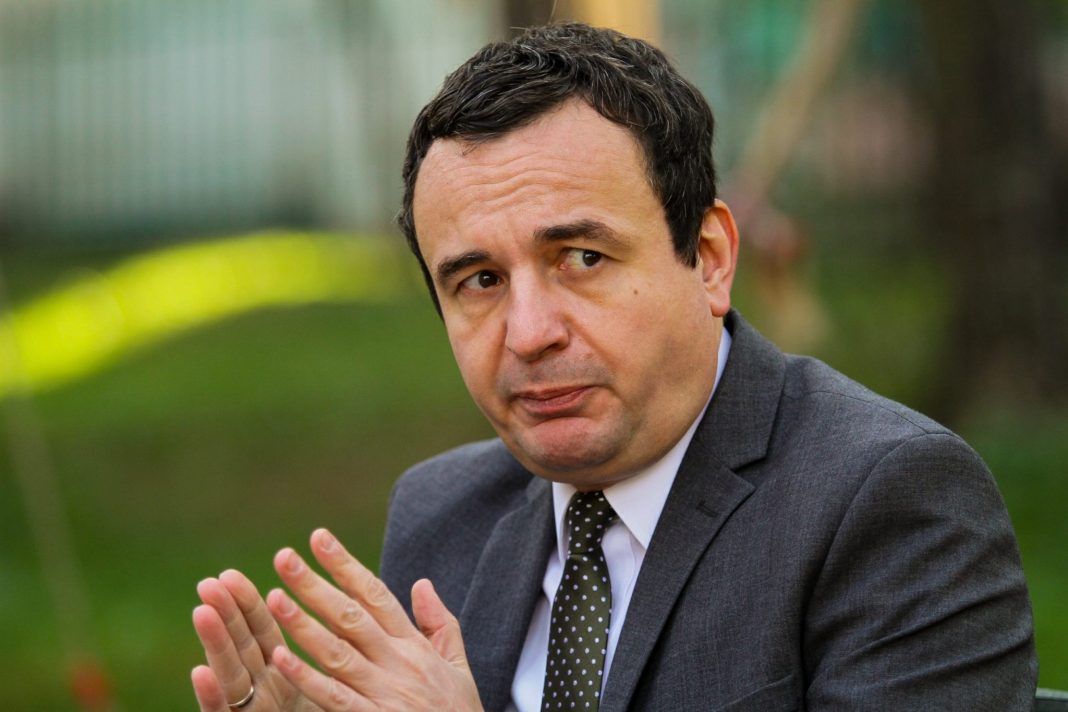
Kosovo’s Prime Minister Albin Kurti has pointed fingers at “Russian allies”, alleging their involvement in cyber activities aimed at disrupting the normalization of relations between Kosovo and Serbia.
Kurti made these claims during the “Open Government Partnership” summit held in Tallinn, Estonia, emphasizing that these actions in Kosovo are on the rise.
According to Kurti, these alleged efforts by Russia’s allies are becoming increasingly evident and concerning in Kosovo. He expressed these concerns at a crucial time when Kosovo is actively engaged in the EU and US-mediated process aimed at normalizing relations with its northern neighbor, Serbia. This process also includes the full integration of minorities into the democratic processes of the state, without external interference. Kurti highlighted that cyberthreats, including disinformation campaigns, cyberbullying, and other such tactics, are playing a significant and defining role in this context.
Notably, Kosovo authorities have previously accused Russia of indirectly pushing Serbia, its ally, to heighten tensions in Kosovo, particularly in the Serbian-majority areas. It is essential to note that these accusations have been firmly denied by the Russian government.
Furthermore, both the United States and the European Union have repeatedly expressed concerns about Russia’s influence in the Western Balkans.
A prior report from the Kosovo Center for Security Studies described Russia’s influence in Kosovo as “hostile” and “malign”. However, the report also emphasized that Russian influence operations primarily target the Kosovo Serb population.
Kurti’s statements on September 6 come in the wake of claims by Kosovo’s President Vjosa Osmani, who, without providing concrete evidence, suggested that Serbia is pursuing a strategy similar to Russia’s actions in Ukraine in 2014.
Osmani drew parallels to Russia’s unlawful annexation of Crimea and its support for pro-Russian separatists in Eastern Ukraine’s Donbas region.
Since 2011, Kosovo and Serbia have been engaged in dialogue aimed at fully normalizing their relations, under the mediation of the European Union. The next round of dialogue is scheduled for September 14, following months of escalating tensions between the two nations.
Tensions flared up in northern Kosovo in late February, where Serbian residents opposed newly appointed Albanian mayors. Recently, central authorities have taken steps that could lead to the dismissal of municipal mayors through a petition process.
SUGGESTED READING