

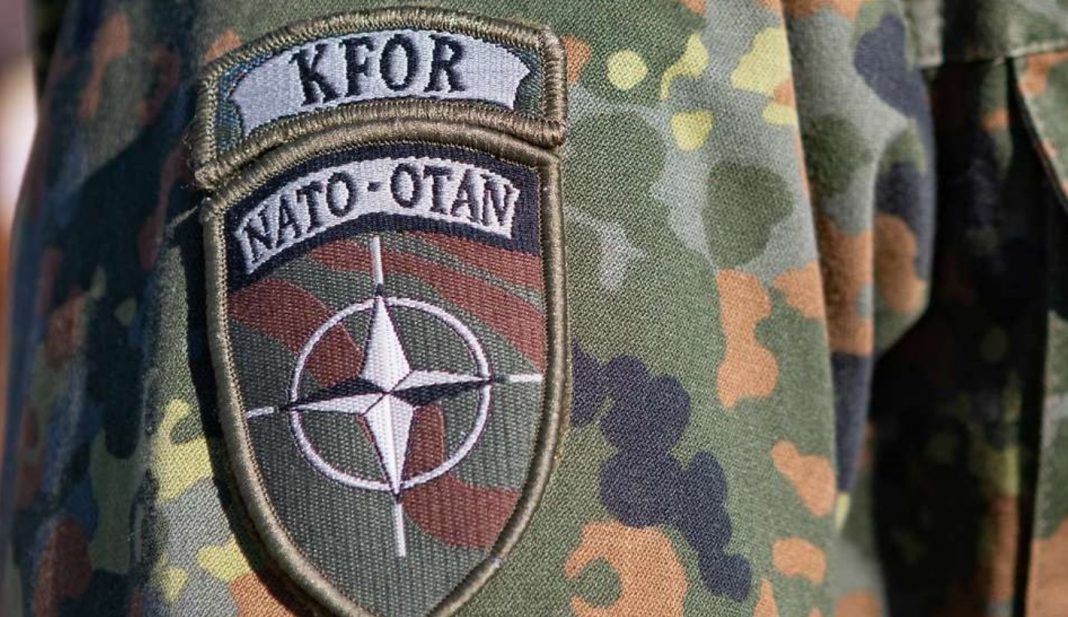
NATO Secretary General Jens Stoltenberg expressed his concern about the escalating tensions in the Western Balkans region. However, he stated that the alliance will do everything to maintain stability in the region. The NATO chief made this statement in Brussels before the meeting of foreign ministers of the 31 NATO member states, where they will discuss, among other things, the security situation in the Balkans.
“What we see there is that tensions are increasing. We see an increase in tensions and provocative rhetoric in Bosnia and Herzegovina. We have seen serious incidents of violence in Kosovo, including the attack on NATO peacekeepers. Ninety-three NATO soldiers have been injured, some very seriously. We also had the attack in Banjska,” said Stoltenberg, adding that “NATO will do what is necessary to ensure stability in the region”. “This is important not only for the Western Balkans but for the whole of Europe,” Stoltenberg emphasized.
Germany sends additional troops
On her part, German Foreign Minister Annalena Baerbock described the discussions at the NATO ministerial level on the situation in the Balkans as very important. She stated that “the perspective of the accession of the countries in the region to the EU is important because it represents vital security”. Regarding the situation in the Balkans, Baerbock mentioned that external actors are constantly trying to destabilize the region, and sometimes, according to her, “peace often hangs by a thread”.
“This is true not only for the situation on the border between Kosovo and Serbia but also for the situation in Bosnia and Herzegovina. NATO, as well as the European Union, are guarantors of the security of the Western Balkans,” said Baerbock, warning that Germany will send an additional 150 soldiers next year as part of the KFOR mission.
The EU’s High Representative for Foreign Affairs and Security Policy, Josep Borrell, said that the situation, stability, progress, and alignment of the foreign policy of the countries in the region with the European Union are crucial.
“Allow me to emphasize the importance of cooperation between the EU and NATO in north Kosovo. Our EULEX mission is positioned and has a strong cooperation with KFOR and is facing challenging times. We will continue to ensure stability and provide security in this part of Kosovo and at the border with Serbia,” said Borrell, urging Kosovo and Serbia to “show willingness to reach agreements to open their European path”.
The possibility of increasing the number of troops is discussed
Nevertheless, NATO Secretary General Jens Stoltenberg said that during the meeting of foreign ministers of NATO member countries, there will be a clear discussion about the possibility of a permanent increase in the number of KFOR troops in Kosovo. Stoltenberg also mentioned this a week ago during visits to the region. While this permanent increase in troops comes after the terrorist violence in north Kosovo on September 24, where an armed group of Serbs killed a Kosovo Police officer and later three attackers.
The Associated Press reports that violence between Kosovo and Serbia has erupted twice in the last few months, and Western countries fear that Russia may try to stir up trouble in the Balkans to divert attention from the war in Ukraine. After the violence in northern Kosovo, NATO sent about a thousand additional troops, raising its troop levels in Kosovo to 4,500.