

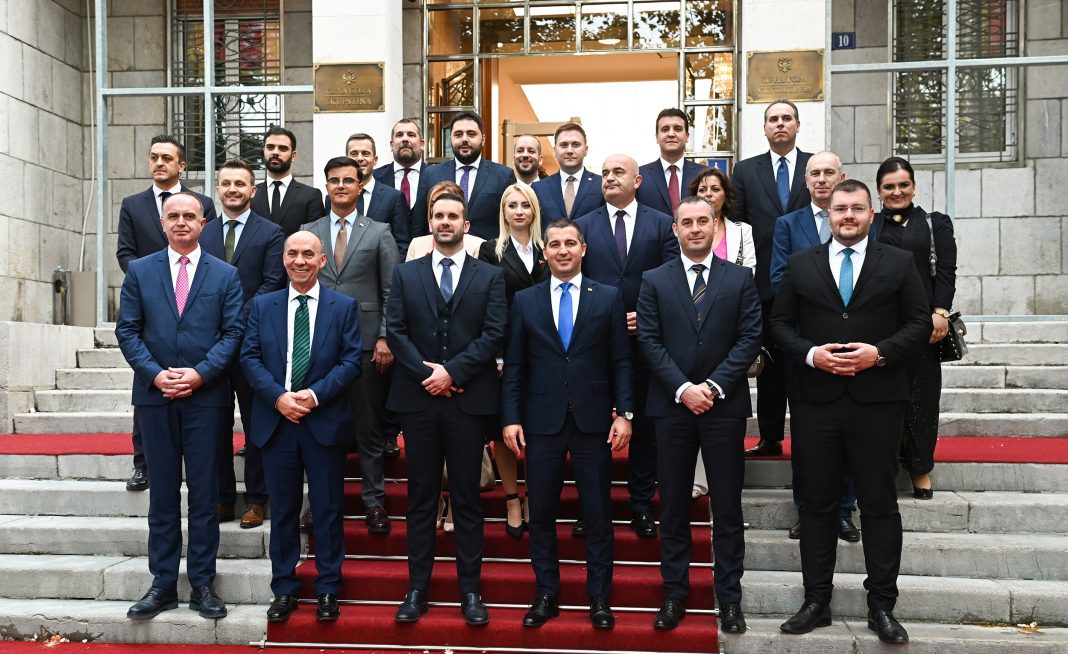
The reorganization of the government of Montenegro and the inclusion of representatives from pro-Serbian and pro-Russian parties, expected to take place in the coming days, could have a negative impact on the European integration process, according to analysts. The concern is even greater because representatives of these parties oppose Euro-Atlantic values.
Analyst Ismet Kallaba highlighted the resurgence of nationalism in institutions through various statements and actions.
“If until August 2020 they waged their war outside the system by not being in power, from this year, entering power, they fight from within and find it easier. Every day, we witness various declarations and actions of pro-Serbian and pro-Russian parties.”
Analyst Suzana Ganić believes that the government reshuffle may slow down, but not halt the integration process.
“As for the government’s reorganization, I believe that Montenegro will not change its European path as it has strong citizen support, but it may slow down the integration process.”
According to Ganić, this stance was best reflected in a recent meeting between the leader of the Bosnian Serbs, Milorad Dodik and Andrija Mandić in the parliament of Montenegro, where they demonstrated a political gesture aimed at sending a public message that they will work diligently to create a “Serbian world”.
“Dodik’s visit to Montenegro can be seen as a theatrical performance, where he was greeted with protests by the citizens. He came to Podgorica to convey specific messages from the Russian and Serbian world,” Ganić said.
Meanwhile, analyst Ismet Kallaba said Dodik’s visit to Podgorica served the interests of the Serbian world.
“In this context, I would also mention the recent visit of the leader of the Serbian entity in Bosnia and Herzegovina, Milorad Dodik, who openly offered Montenegro a special relations agreement which, in a way, is the embodiment of the so-called ‘Serbian world’ project.”
According to analyst Kallaba, the actions of representatives of pro-Russian and pro-Serbian parties are continuously creating diplomatic incidents with neighboring states.
“They are against good neighborly policies among Western Balkan countries, reminiscent of the nationalist rhetoric used in the 1990s.”
Official Washington and the European Union have expressed serious concern and opposition to the inclusion of parties influenced by Russia in the government. According to them, this could affect interethnic relations in Montenegro and stability in the region.