
European Union spokesperson Peter Stano confirmed on Friday that the bloc has scheduled a meeting for March 19, as part of the dialogue between Kosovo and Serbia at the level of chief negotiators.
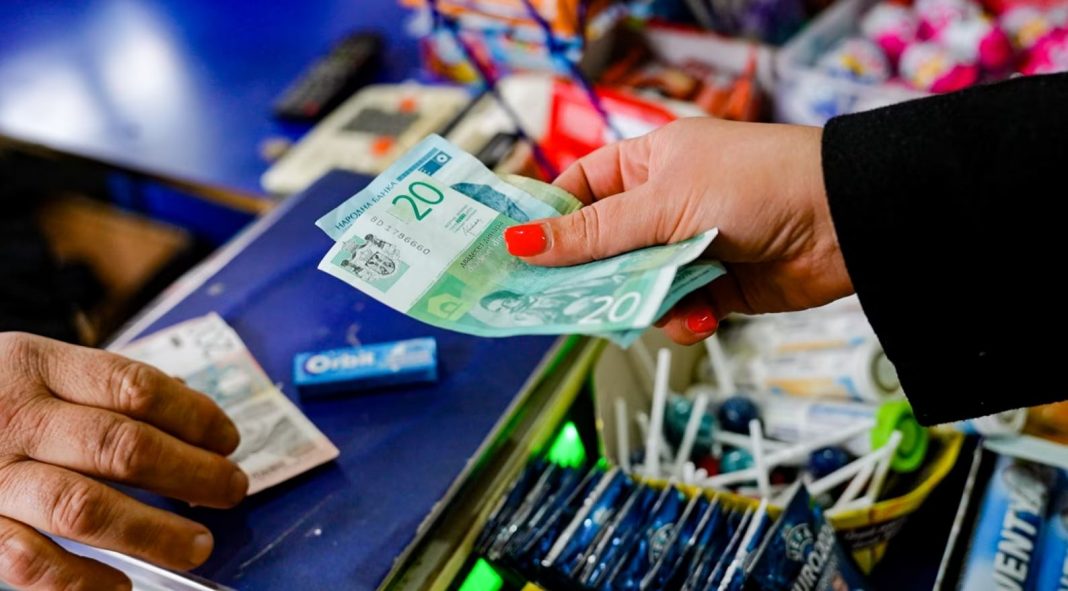
Stano said that in the meeting, which will take place in Brussels, they will discuss the issue of the Serbian dinar, the use of which Kosovar authorities banned through a new regulation on currency that came into force in February.
“We will have the next meeting as part of the dialogue on Tuesday. Chief negotiators have been invited to continue discussions where we left off after the last meeting,” said Stano.
Kosovo’s chief negotiator is Besnik Bislimi, while Serbia’s is Petar Petković.
On Friday, the United States Special Envoy for the Balkans, Gabriel Escobar, said in an interview with Radio Free Europe (RFE) that he had not been able to persuade Kosovo’s Prime Minister Albin Kurti to address Western concerns regarding the ban on the use of the Serbian dinar in Kosovo.
He emphasized that he hopes for an urgent solution to this issue on Tuesday in Brussels.
“I am still hoping that when negotiators meet in Brussels on Tuesday, they will find an immediate solution to allow cash transfers in euros for these people,” Escobar told RFE.
The Central Bank of Kosovo began implementing a new regulation on February 1, which stipulates that only the euro should be used for cash payments, thereby ending the use of the Serbian dinar.
The Serbian state allocates millions of euros to Serbs in Kosovo after paying them in dinars – through a parallel system – salaries, pensions, and additional aid.
The US and the EU have criticized this decision, saying it was taken without prior consultation and without considering the negative impact on the Serbian population in Kosovo, therefore requesting a postponement of its implementation.
Kosovo argues that the dinar issue is technical and should not be included in the political dialogue for normalizing relations. Meanwhile, Serbia seeks a political solution to this issue.
Kosovo and Serbia discussed the dinar issue in Brussels at the end of February. However, in that meeting, where Kosovo was represented by the Governor of the Central Bank of Kosovo, Ahmet Ismaili, there was no result.
Asked if the EU expects Kosovo to send a delegation from the Central Bank again for discussions on the dinar, Stano said that “the meeting is invited to be at the level of chief negotiators”.
Part of the discussions is expected to be the implementation of the Agreement on the normalization of relations between Kosovo and Serbia – reached last year. The EU has said that the parties have not yet started to implement it. Kosovo accuses Serbia of obstructing this agreement.
This agreement provides for a level of self-governance for the Serbian community in Kosovo and mutual recognition of state symbols, while also requiring Pristina and Belgrade to implement all previous agreements reached during the dialogue.
“It is positive that there is good faith to address this issue. Also, the overall implementation of the agreement from Ohrid is an urgent issue and this will be on the agenda,” emphasized Stano.
In recent days, there have been visits to Kosovo and Serbia by Westerners in a hurry to persuade the parties to return to the dialogue with good faith and to find solutions to urgent problems.
In Kosovo, the first to visit was the EU Special Envoy for the dialogue, Miroslav Lajčák, followed by the US envoy Escobar. Lajčák visited Belgrade on Friday, March 15.
Escobar called on Kosovo and Serbia to fully implement the agreements reached in the EU-facilitated dialogue.
“Both parties need to continue with the full implementation of the agreement, so it is not a one-sided attempt for only Kosovo to make those tough decisions,” Escobar said during a conference in Pristina with Kosovo’s President Vjosa Osmani on Wednesday.
All these meetings, according to diplomatic sources in Brussels, aim to create an atmosphere in which there can be progress in solving urgent problems, and such are considered the use of the dinar in Kosovo and the implementation of the agreement on normalizing relations between Kosovo and Serbia.