

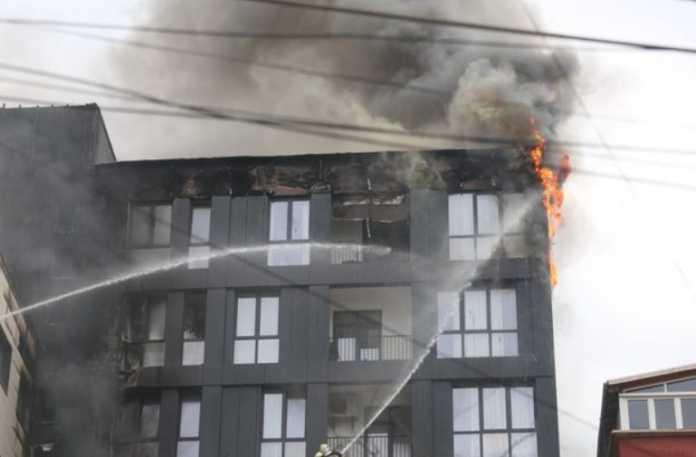
Construction codes in Albania fail to guarantee effective fire protection. The 2020 law mandates designers to take safety measures, but it does not require the installation of external staircases or fire-resistant insulation.
Fires in residential buildings often risk spiraling out of control due to inadequate urban infrastructure and delayed fire suppression efforts.
In such situations, the survival of residents often comes down to luck, as public buildings do not meet evacuation or emergency standards. Most buildings have only one internal corridor and an elevator, with no external emergency staircases. Exceptions to this rule are structures built by international organizations.
Unlike other European countries, Albania has no legal requirement for fire-resistant materials. This lack of fire-resistant thermal insulation leaves residents at a disadvantage during emergencies.
Additionally, EU countries implement other safety elements, such as fire-resistant doors that isolate one floor from another, fireproof entrance doors to apartments, windows that can withstand fire for 60 to 90 minutes, and fire-resistant electrical cables.
The 2020 law on “Inspection and Regulation of Construction Works” places responsibility on the designers and developers of buildings to ensure fire safety. However, with current codes and buildings constructed to date, this obligation is often limited to a notice outlining evacuation procedures. This document, in buildings without an administrator, is typically missing.
Recent incidents reveal that emergency response teams are the sole line of defense during fires, as most buildings lack specialized fire extinguishers to prevent the spread of flames.
Moreover, the costs of damage caused by fires can become unaffordable for many families, especially given the low number of insured properties.




