

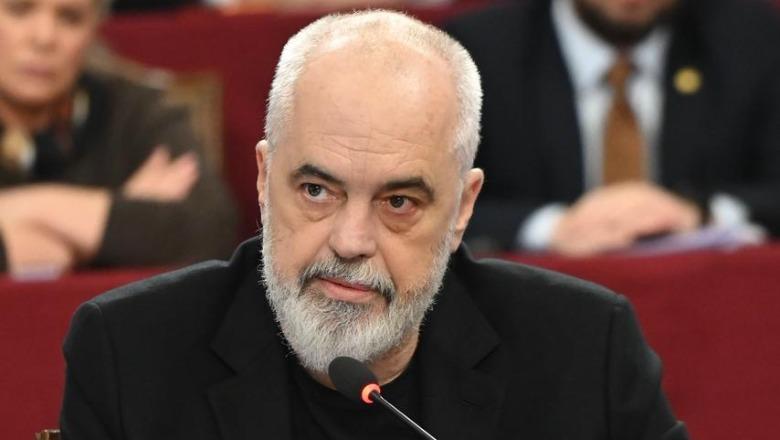
Prime Minister Edi Rama stated on Monday, during his address at the Socialist Party Parliamentary Group meeting, that the amendments to the Code of Criminal Procedure aim to clarify the limits of the measure of suspension from duty for high state officials.
Rama emphasized that the suspension of a minister affects the function, not the individual, and that the proposed changes do not interfere with the independence of the judiciary while safeguarding the decision-making autonomy of the executive branch.
According to the proposals, suspending a minister during the preliminary investigation phase is considered unjustified, as it does not only affect the individual under investigation but also harms the institutional function.
It was further stressed that suspending a minister results in blocking the work of the institution, not merely the personal absence from office. The legislative initiative aims to close constitutional interpretation gaps by providing clear “function-by-function” definitions.
Currently, the article excludes “persons elected under the electoral law.” Under the proposed amendments, this category would also include: the President of the Republic, the Ombudsman, the Prime Minister, the Deputy Prime Minister, Ministers, Members of the Constitutional Court, and the Chair of the Supreme State Audit.
The proposed amendment is presented as principled and not linked to any specific case. The majority has signaled institutional action to oppose suspensions it considers interference in the executive branch.
It is further emphasized that support for an independent judiciary remains unchanged. According to the proposals, the amendments seek to address a deficiency in the current wording of Article 242 of the Code of Criminal Procedure.




