

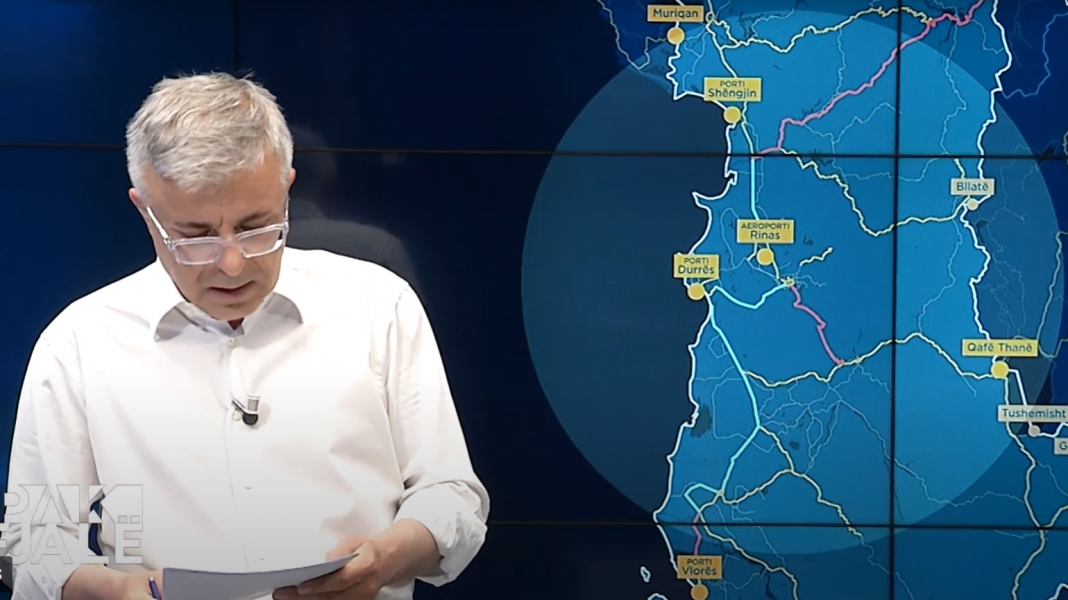
Tonight’s show “In a Few Word” was focused on the importance of road infrastructure in Albania.
Albania has a weak infrastructure, where out of around 5 thousand kilometers of national roads, only 147 km make up highways.
At the moment, there are only three roads that fulfill the criteria for a highway:
Highway Elbasan – Tirana
Highway Levan – Vlora
‘Rruga e Kombit’/ ‘Nation Road’, only the part from Rreshen-Morina
Around 160 km are roads that link cities but they don’t possess the status of a ‘highway’. In the Road Coad, they are defined as B-category roads. An example is the road Tirana-Durres.
The construction of new roads, mainly of uninterrupted roads that connect the cities, have proven to contribute to a country’s progress.
Infrastructure increases the mobility of the workforce, capital as well as merchandise.
Infrastructure increases the capabilities of people and enterprises and lowers their costs.
After the inauguration of the ‘Nation Road’ that connects Albania with Kosovo, border-crossings from Kosovo in the period June-July, went from 700 thousand to 1.2 million.
The construction of roads also increased the volume of commerce between both countries, thus bringing in more revenue for the economy.
Another example worth noting is the construction of the road, Tirana-Elbasan, which has practically united the markets of these two cities and has created more accessibilities for citizens.
The entire air distance from Albania’s most northern point to its southernmost point is 340 km.
All of Albania can be reached in a time-distance of 2 hours from Tirana, if we were to ride on highways instead of roads and the entire area around Tirana that can be reached in one hour, could become one economic and social zone.
At the moment, if we were to just turn the current roads to European-standard highways, one entire economic zone could include Fier, Lushnje, Durres, Lezha, Shkoder, Elbasan, Berat.
However, the lack of infrastructure has fragmented the internal market. A prime example of this is Korça.
The road from Tirana to Korça is around 100 km shorter than Korça-Thessaloniki. However, both roads last around 2 hours 50 minutes, because Korça-Thessaloniki is a highway.
In turn, this leads to residents of Korça finding it easier and actually going to spend money in Thessaloniki rather than Tirana.
Apart from the benefits of the internal market, Albania has 3 great opportunities in the international market.
Albania has a geographic position between the east and west. It is surrounded on all sides by Albanians, in Kosovo, Macedonia, Montenegro and even Greece and Italy. This also poses a great potential for trade and tourism, seeing that it is spread over two Mediterranean seas.
This means that it could turn into a key point and corridor for trade in the Balkans and to the Middle East.
Albania could create a large economic market for all Albanians in the region, which amounts to around 7-8 million people.
The country’s connection through road infrastructure in the highest standards could turn Albania into an important tourist and commercial center in Europe.




