

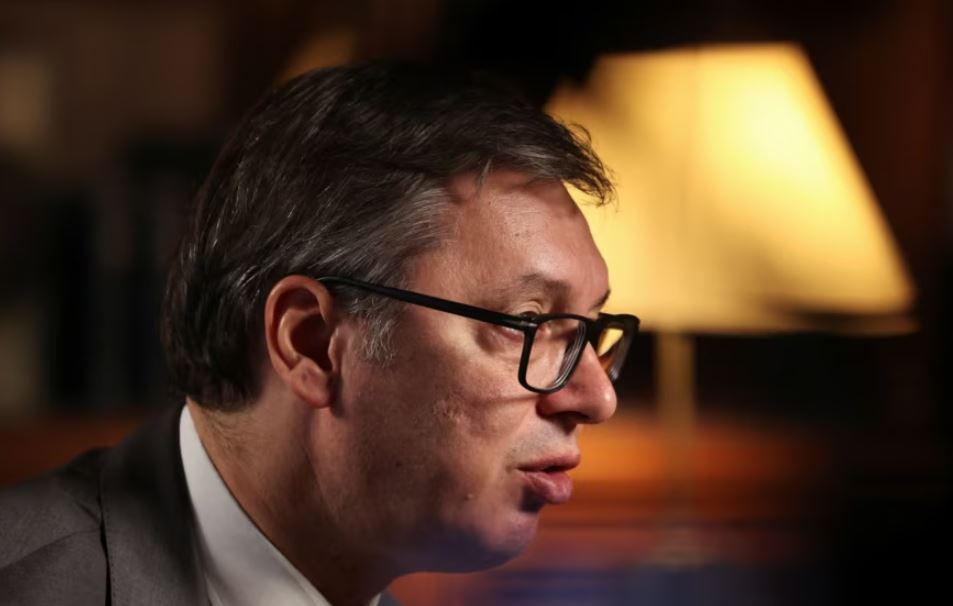
The President of Serbia, Aleksandar Vučić, said on Wednesday that he has warned the European Union envoy for the Kosovo-Serbia dialogue, Miroslav Lajčák, about the actions of Pristina in the dialogue process.
The two officials held meetings at the World Economic Forum, which is being held in Davos, Switzerland.
“An open conversation with Miroslav Lajčák about the situation in Kosovo and the threats that the Serbian population faces every day, which threaten the peace and stability of the region,” said Vučić through a post on Instagram.
Vučić has repeated several times what he considers threats to the Serbian population in Kosovo, but without providing facts for his claims.
According to Vučić, Serbia has a responsible approach to the dialogue between the two countries, but it is Pristina’s actions that “call into question everything that has been achieved so far in the process of normalizing relations”.
The Prime Minister of Kosovo, Albin Kurti, is also participating in this Forum, but it is not known if he will have a meeting with Vučić these days, writes Radio Free Europe.
A few days ago, Lajčák discussed with the Deputy Prime Minister of Kosovo, Besnik Bislimi, also in Davos, with whom he discussed dialogue topics, with special emphasis on the need for the immediate implementation of the Agreement on the way to the normalization of relations between Kosovo and Serbia.
This Agreement was reached in February last year in Brussels.
In March, in Ohrid, North Macedonia, the parties agreed on an implementation annex, but according to EU officials, no steps have been taken in that direction.
The agreement on normalization, of 11 articles, provides, among other things, a level of self-management for the Serbian community in Kosovo and mutual recognition of state symbols, while it asks Pristina and Belgrade to also implement all previous agreements reached during the dialogue.
Kosovo and Serbia, under the mediation of the EU, have started the dialogue process, with the aim of normalizing relations, since 2011.
The parties have reached many agreements, but not all of them have been implemented.




