

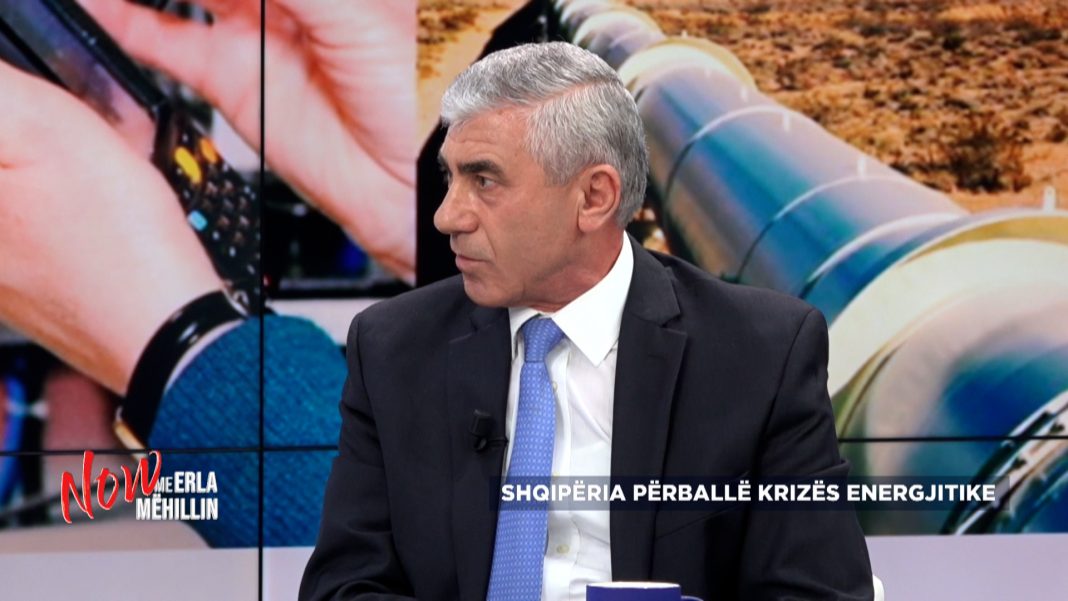
Dean of the Mediterranean University, Ardian Civici stated on Euronews Albania’s political panel show ‘Now’ that European countries are currently facing the fear that apart from a rise in the price of energy, there might be a scarcity of oil and gasoline.
But what are the consequences currently facing Albania amid this new series of unfavorable developments?
The economy expert emphasized that the rise in the price for petrol and gas will also cause a direct rise in the price of goods and services.
“As we speak, European countries are scared that along with a rise in the price for oil and gas, there will also be a scarcity of goods in the market. What is important right now and that could also affect Albania, is the fact that these price rises lead to a distortion of prices that’s linked to goods and services that are directly linked to the use of oil, gas and electricity. This is the highest risk we face as the situation escalates, a much higher risk than the rise in the price of electricity,” – said Civici.
In the course of explaining the possible consequences that could come as a result of this global crisis, Civici laid out 2 possible mechanism of action that according to him should be implemented by the Albanian Government in order to mitigate the negative effects of this crisis on our economy.
“We need immediate policies of reaction, similar to the relief packages set in place during the COVID-19 pandemic, but the focus should be on the poorest groups, families and small businesses. We need to urgently reflect on our structural politics in terms of the diversification of our energy sources, but most of all, we should increase our energy production using all the elements currently available to us,” – argued Civici.
‘We need to promote new investments and get rid of abusive taxation’
According to panel guest and head of the Area board, Anita Shushku, the only solution to the current crisis is through promoting new investments in the field of energy.
Shushku argued that so far, there has been a total of 50 project on new energy investment that have been submitted to the ministry of infrastructure and energy, however, none of them have been taken into account.
Another issue according to Shushku concerns local taxes imposed on companies that are currently operating in the energy sector. According to Shushku, investors should be supported not demoralized with ‘abusive taxes’.
“Investors that are currently producing are faced with barriers like local taxes. We need to make sure that investors are protected, not only when they being investing but during their entire operation. If we increase these useless and abusive local taxes, you’re only sabotaging future investments and demoralizing producers,” – said Shushku.
‘The government should bear the added costs of the energy crisis but allocating spending’
According to economy expert, Majlind Lazimi, the government shouldn’t raise the price of electricity, because that would have more negative rather than positive effects on the economy.
In fact, Lazimi warned that a rise in the price of electricity should result in an “inflationist downward spiral” effect that would negatively affect the overall economy.
“The immediate domino effect would be a rise in the price of other goods as well as food and services,” – said Lazimi.
The economy expert also noted that the government should compensate the added cost of electricity by reallocating its spending.
“We risk not being able to secure the necessary energy, if all countries in the region have a high demand,” – added the expert.
According to Lazimi, we need an additional budget in order to buy more electricity and we need to intervene with the private energy producers that are currently exporting to other countries and try to negotiate so we can buy from them.
Lazimi also noted that citizens shouldn’t panic because the rain season is ahead of us and things could change. He is optimistic that the government will have the necessary resources to handle the situation and compensate for the added costs instead of passing the burden onto citizens.
YOU MIGHT ALSO LIKE




