

‘Reciprocity requirements for entry to their respective jurisdictions, or the reciprocity of license plates’ is an issue that has been stirring up the waters for both Kosovo and Serbia.
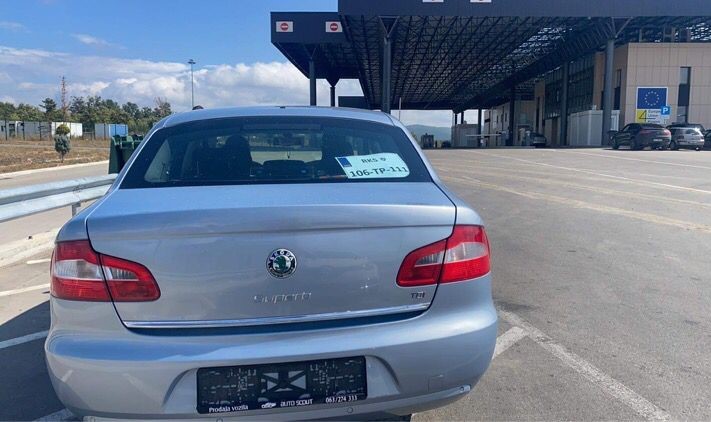
The new guidelines introduced today, by Albin Kurti’s government, require all Serbian drivers to get a hold of temporary registration plates, upon entry to Kosovo.
Kurti came out with a statement earlier today saying that this decision “isn’t meant to provoke destabilization” and that it was “not a personal decision but rather a decision imposed onto Kosovo, by none other than Serbia”.
Kurti also called on all Serbian citizens to not have any fear that their rights are going to be taken away from them and he urged them to go on with their days, as usual.
In addition, the head of Kosovo’s Serbian Lists, Goran Rakic, called this an outrage and a “direct threat to Serbs in Kosovo”. Rakic also demanded Serbia’s president, Aleksandar Vucic, to react to the issue with urgency.
Faced with the present situation, the EU has also made a declaration today calling for both sides to “reduce tensions” while sending EU’s special envoy to mediate and attempt to resolve the issue.
But what is the principle of ‘reciprocity of license plates’ and where does it originate from? Euronews Albania is bringing you a short account that will help put things into context.
Serbia has refused to recognize Kosovo’s Declaration of Independence and sovereignty. As a result, it doesn’t recognize its vehicle registration plates – with the acronym RKS (Republic of Kosovo) – either.
Parallel to this, for several years, Serbia was involved in issuing a large number of license plates for the Serbs of Kosovo, which only carried the acronyms of their own cities. These plates were then considered illegal by the authorities in Kosovo.
This was enough to put the issue on the table back in 2011, when the dialogue meant to normalize the countries’ bilateral relations began, in Brussels.
The sides were able to meet halfway at the time and come to an agreement, which said that vehicles in Kosovo would travel with temporary license plates in Serbia and that Serbian vehicles would have to cover their plates with a sticker, covering their national symbols, when traveling to Kosovo.
The agreement was reviewed back in 2016, when the stickers that were to be used on such occasions were agreed on. However, once again, implementation was delayed.
-
Serbia on Kosovo’s license plates:
Vehicles registered in Kosovo are allowed to travel around Serbia, only if they’ve been issued a set of temporary plates by Serbian authorities (carrying the acronym KS).
These temporary plates cost 3.5 euros (420 dinar) and are valid for 60 days.
These plates can be picked up at all border-crossing points in Kosovo.
- Kosovo on Serbia’s license plates:
Vehicles registered in Serbia are allowed to travel in and around Kosovo only if they’ve been issued a set of temporary plates by Kosovo authorities (carrying the acronym RKS).
These temporary plates cost 5 euros and are valid for 60 days.
These plates can be picked up at all border-crossing points in Kosovo.
Representatives of the opposition in Kosovo have been raising concerns regarding the penalties that are being suffered Albanians in Preshevo, Medvegje and Bujanovc.
YOU MIGHT ALSO LIKE





