

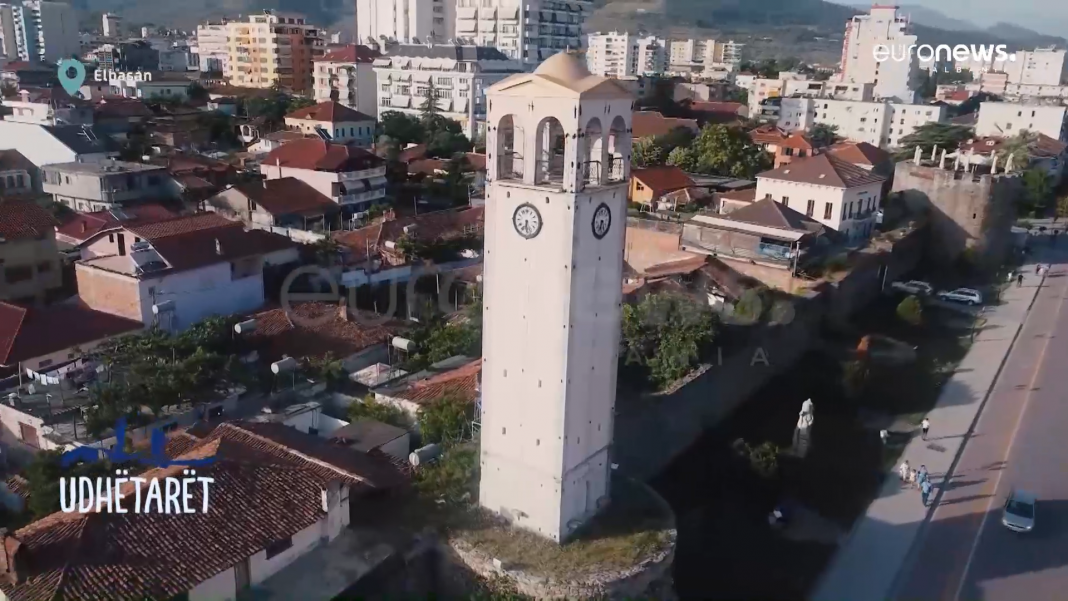
Elbasan, the third-largest city in Albania with a population of around 128.000 inhabitants, is located around 40 km southeast of Tirana. Located in central Albania, this city is thought to date back to the 2nd century BC, when it was an ancient Illyrian settlement. In the 2nd century, Elbasan was known by the name of Skampius or Skampi.
Seeing that it’s found exactly in the middle of the country, this has made it a very important center, linking cities from the north to the south in terms of trade, military and urban development and this prime location has also contributed to the infrastructure of the city, which has always been well-organized.
These are 5 very interesting historical attractions that you shouldn’t miss out on during your visit to Elbasan.
Castle of Elbasan
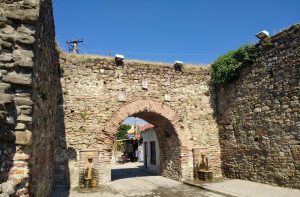
In the 15th century, Elbasan was conquered by Sultan Mehmet II and its name was changed from Skampa to Elbasan by its Ottoman invaders, because in the Turkish language, ELI-BASAM means “I place my hand”, and this territory was one of the first regions attacked by them. With the arrival of Mehmet II, Elbasan turned to a military center, that was often used by the Ottomans to attack the stronghold of Kruja.
After experiencing a defeat in Kruja, Sultan Mehmet II decided to rebuild the older Roman castle, at the entrance of which, to this day, you can find a plaque with the Turkish inscription: “I place my hand here, I the Sultan, son of a Sultan, triumphant Sultan, Mehmet, King of Kings.”
This castle is an important point that tells the history of one of the invaders that stayed the longest in Albanian lands, precisely 500 years, which is why it deserves to be visited by local and foreign tourists, in order to gain a deeper understanding of the history of our nation and the many efforts and struggles for independence.
Nowadays, the castle of Elbasan remains one of the only ones that is still inhabited as within it you can find historical houses, residences, mosques, churches and even the old Turkish baths, known as the Hammams.
Clock Tower
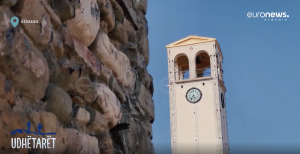
In the walls of the Castle of Elbasan, close to the southern gate you can find the Clock Tower, which rises to around a 30-meter height, three stories and since 1963 it has been designated a monument of culture. These kinds of architectural structures have been a characteristic of our cities, since the 16th century, especially in urban centers like Shkodra, Berat, Kruja as well as Prishtina and Prizren.
King Mosque
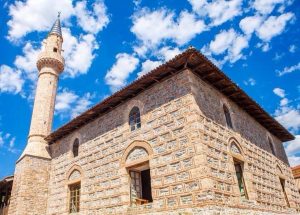
Built back in 1492 by Sultan Bajazit, this mosque is one of the oldest in Albania, and is found at the center of the castle, close to the entering gate.
Since 1948, this mosque was designated a national monument of culture and it was, fortunately, able to resist the massive destructions of objects of faith that happened during the communist regime, that imposed atheism in the entire nation.
Via Egnatia
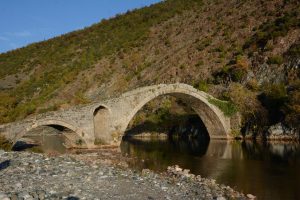
Via Egnatia or the Egnatia Road, is an infrastructural monument built by the Romans, starting from the mid-2nd century BC, which has served as a communication bridge between the east and the west, Europe and Asia, from the Adriatic Sea to the northern Aegean Sea.
This historical road mentioned by the famous philosopher and historian Strabo, is definitely worth paying a visit to while in Elbasan, in order to have a first-hand experience and travel back in time, to then be able to have a better grasp of the importance of these territories, linked together by this road that passed across today’s Albania, North Macedonia, Greece and European Turkey.
Turkish Baths
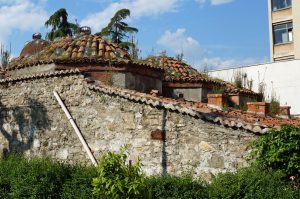
The Turkish baths, known as Hammams are found within the castle of Elbasan, also known as the Women’s Hammams and they date back to the 16th century. This architectural structure includes three rooms, – the dressing room, the isolation room and the shower room. During the 20th century, this Hammam was used as a storage space, whereas today it has turned to a very attractive site, which contains glimpses of history and the urban life of this city during the Middle Ages.
The Hammams, also known as Turkish baths speak of an ancient wisdom through the ages, that bring together elements that aren’t just relaxing but also very curative and beneficial for the overall health.
These were the 5 attractions worth paying a visit to while in Elbasan, so don’t hesitate to head over to this historic city, just waiting to be discovered!
YOU MIGHT ALSO LIKE




